 Skip to content

This article discusses how commercial solar lights can meet high intensity lighting requirements, focusing on technological advancements and the role of Hangchi New Energy Co., Ltd. Key points include the challenge of generating sufficient power from sunlight to maintain high lumen output, the importance of efficient solar panels, large-capacity batteries (especially LiFePO4), and intelligent controllers. Hangchi, a professional manufacturer since 2018, operates a 20,000-square-meter factory with 20,000 units monthly capacity, offering products like all-in-one and split-type solar street lights, flood lights, and garden lights. They emphasize strict quality control, CE/RoHS/ISO 9001 certifications, and warranties of five years or more. Applications cover municipal roads, industrial parks, parking lots, and off-grid areas. Customization through OEM/ODM services allows adaptation to specific project needs. International experience across 30+ countries enables understanding of diverse technical standards and environments. The article concludes that with proper design and partner selection, high intensity solar lighting is a viable, sustainable alternative to grid-connected systems.
In the evolving world of outdoor lighting, commercial solar lights have emerged as a viable solution for high intensity applications. While solar lighting was once associated only with low-power decoration or emergency illumination, advances in photovoltaic technology, battery storage, and intelligent control systems now enable solar fixtures to deliver powerful, reliable light for demanding environments such as highways, industrial parks, parking lots, and municipal roads. This article explores how commercial solar lights achieve high intensity performance, the key technological factors, and how a manufacturer like Hangchi New Energy Co., Ltd. is meeting these rigorous standards.
The Challenge of High Intensity Solar Lighting
High intensity lighting requires strong lumen output, consistent operation through the night, and the ability to withstand adverse weather conditions. Traditional grid-powered lights can draw unlimited electricity, but solar systems must harvest, store, and manage energy from sunlight. The challenge is to generate enough power during the day to maintain high output after sunset, even on cloudy days. This demands high-efficiency solar panels, large-capacity batteries, and smart energy management.
Key Components for High Lumen Output
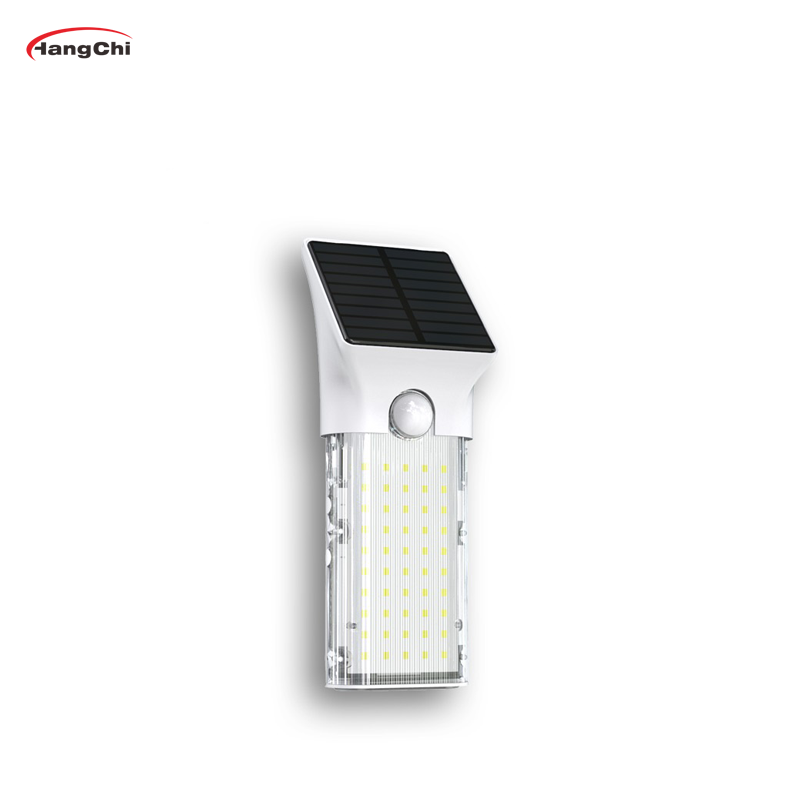
Modern commercial solar lights use high-efficacy LEDs that can produce over 200 lumens per watt. Combined with optimized optics, these LEDs concentrate light where needed. The solar panel must be sized appropriately – typically 100W to 300W for street lighting – and the battery capacity must support multiple nights of autonomy. Hangchi New Energy Co., Ltd., established in 2018, specializes in such systems. The company operates a 20,000-square-meter manufacturing facility with a monthly production capacity of up to 20,000 units, enabling them to produce high-quality solar lights that meet demanding specifications.
Hangchi’s Approach to High Intensity Solar Lighting
Hangchi New Energy Co., Ltd. is a professional solar lighting manufacturer that focuses on research, development, production, and global supply. Their product line includes all-in-one solar street lights, split-type solar street lights, solar flood lights, and other outdoor solutions. For high intensity applications, Hangchi offers configurations with higher wattage LEDs, larger solar panels, and lithium batteries with deep cycle capability. Their engineering team evaluates local sunlight conditions, installation height, road width, and required operating hours to recommend suitable configurations.
Quality and Certifications
Quality is a cornerstone for Hangchi. They maintain strict quality control from raw material inspection through production, assembly, waterproof testing, aging testing, performance testing, packaging, and shipment. Hangchi has obtained CE, RoHS, and ISO 9001 certifications, demonstrating adherence to international standards. They offer warranties of five years or more on many products, reducing maintenance costs for commercial clients.
Applications for High Intensity Solar Lights
High intensity solar lights are used in a variety of settings:
- Municipal Roads: Arterial roads and highways require consistent, bright illumination for safety. Solar street lights with 100W to 300W LED modules can meet these needs.
- Industrial Parks: Large areas need flood lighting for security and operations. Solar flood lights from Hangchi can be customized with high lumen output and motion sensors.
- Parking Lots: Commercial parking facilities benefit from solar lighting that eliminates trenching and reduces electricity costs.
- Remote Off-Grid Areas: In locations without grid access, high intensity solar lighting provides reliable illumination for construction sites, mining operations, and temporary events.
Case Studies and International Experience
Hangchi has exported to more than 30 countries, including Europe, the Philippines, Africa, North America, and Australia. Their international project experience helps them understand different technical standards, environmental conditions, and customer expectations. For example, in regions with high temperature or coastal salt spray, they can adjust housing materials and sealing to ensure longevity.
Technological Innovations Enhancing Intensity
Several innovations enable solar lights to achieve high intensity:
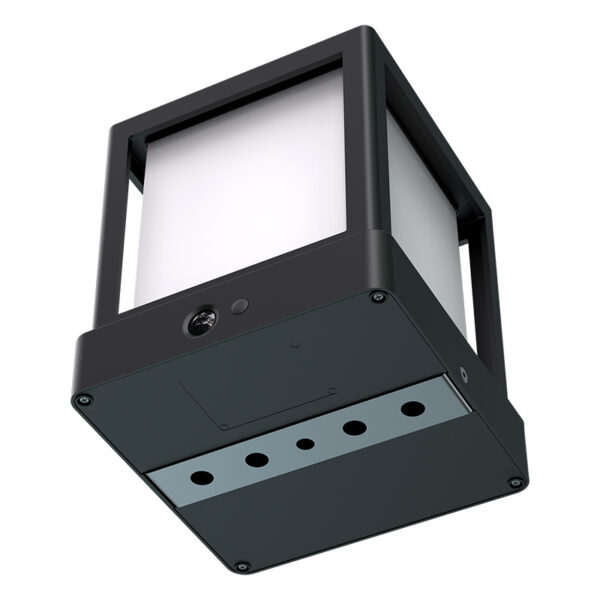
- High-Efficiency Monocrystalline Solar Panels: These panels convert more sunlight into electricity, reducing the required surface area.
- Lithium Iron Phosphate (LiFePO4) Batteries: With longer life, higher depth of discharge, and better temperature tolerance, they store more energy per cycle.
- Intelligent Controllers: Microcontrollers manage charging, discharging, and lighting schedules. They can implement adaptive brightness, dimming during low traffic hours, and motion sensing to optimize energy use.
- Thermal Management: High power LEDs generate heat; proper heatsinking and housing design prevent performance degradation.
Split-Type vs. All-in-One Designs
For high intensity applications, split-type solar street lights often offer advantages. The solar panel can be mounted separately to capture more sun, while the battery and light head can be placed optimally. Hangchi provides both all-in-one and split-type models, allowing customers to choose based on project needs. Customization options include lighting power, battery capacity, solar panel specifications, control functions, logos, and packaging.
Energy Management and Autonomy
A key requirement for commercial solar lights is autonomy – the ability to operate during consecutive cloudy or rainy days. Hangchi designs systems with sufficient battery reserve (often 3-5 days of autonomy) and intelligent dimming schemes. For example, the light may run at 100% brightness for the first few hours, then reduce to 50% after midnight, ensuring illumination throughout the night while preserving battery life.
| Feature | Benefit |
|---|---|
| High-efficiency LED | More light per watt, reducing panel and battery size |
| Large solar panel | Faster charging, even in low sun |
| LiFePO4 battery | Longer lifespan, safer, deeper discharge |
| Smart controller | Adaptive lighting, motion sensing, remote monitoring |
| Robust housing | Waterproof, dustproof, corrosion resistant |
Customization and OEM/ODM Services
For B2B customers, Hangchi provides comprehensive OEM and ODM services. This allows distributors, wholesalers, and project developers to differentiate their products in the market. Customizable aspects include product appearance, lighting power, battery configuration, control mode, mounting structure, logo, color, and packaging. Private-label customers can develop products that match their local markets and sales channels. For large-scale engineering projects, Hangchi can support tenders and municipal programs with tailored solutions.
Quality Control Throughout Production
Hangchi’s quality control spans the entire production process: raw materials, electronic components, batteries, solar panels, assembly, waterproof testing, charging/discharging performance, aging tests, and packaging inspection. This rigorous approach ensures that each unit performs reliably in the field, reducing customer complaints and maintenance costs for contractors.
Conclusion
Commercial solar lights have advanced significantly, now capable of meeting high intensity requirements through superior components, intelligent management, and robust design. Companies like Hangchi New Energy Co., Ltd. are at the forefront, offering reliable, customizable solutions backed by strong manufacturing capacity and international experience. By choosing the right configuration and partner, businesses can achieve sustainable, cost-effective lighting without compromising on performance. Whether for municipal roads, industrial parks, or off-grid sites, high intensity solar lighting is a practical and environmentally friendly choice for the modern world.
Looking Ahead
Hangchi continues to invest in product innovation, intelligent solar lighting technology, and global market development. Their business philosophy emphasizes quality, integrity, innovation, and long-term cooperation. As solar technology evolves, even higher intensities and smarter controls will become available, further expanding the possibilities for commercial solar lighting.
